
Guides
7 things to check in profitable lawn care services
Seven lawn care services ranked by contribution per crew hour, with the setup tax and drive time that quietly sink the routes owners expect to pay best.
What to take away
- Contribution per crew hour, not profit per job, is the number that reflects a route.
- Setup and pack-down minutes belong in the hours, and they are what sink several popular services.
- A service that runs when mowing has stopped can be worth more than a richer one that competes with peak weeks.
- Rank your own services on your own logged times. Any published ranking describes someone else's route.
- Machine-shaped work and labor-shaped work scale differently when you add a person.
No national list of profitable lawn care services fits every route. A list that ignores drive times describes someone else's operation. The arithmetic travels between operations. Apply it to the seven services below, then rank them on your own logged hours.
The seven services, ranked by contribution per crew hour
Prices are illustrative and use typical US ranges as of 2026. Substitute your own. The ranks assume a 3,000 to 5,000 square foot residential property, one crew, and a drive time under 15 minutes. Your setup tax and drive time can reorder them.
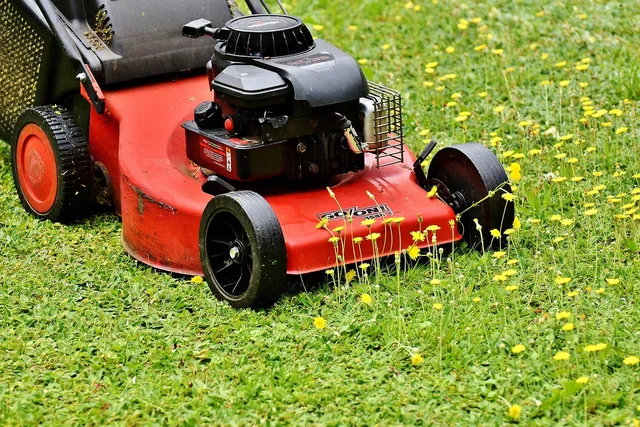
1. Weekly mowing contracts. The base service that pays the truck. Price per cut, billed monthly at a set number of cuts. Setup tax is near zero because the machine is already running. Typical: $45 to $85 per cut for a quarter-acre lot as of 2026. Machines include Exmark Lazer Z and Scag Turf Tiger, roughly $10,000 to $18,000 new. Check: this service often beats richer ones on contribution per crew hour.
2. Fertilization programs. Four to six applications a year on a standing schedule. Typical: $65 to $95 per application for 5,000 square feet as of 2026. Material cost is real. A PermaGreen Triumph or Z-Spray spreader, roughly $8,000 to $12,000 new, needs loading. The visits are short and repeat. Requires a state applicator license in most states. Check: visit length and repeat frequency.
3. Weed and pest control. Higher price per visit than fertilization, and the same short visit. Typical: $75 to $125 per visit as of 2026. Products include Dimension 2EW, Prodiamine 65 WDG and Tzone SE. Same license category as fertilization in many states. Check: certification category with your state department of agriculture before you sell it.
4. Gutter clearing and downspout flushing. Small ticket, short visit, and it rides along with a cleanup already on the property. Typical: $95 to $175 as of 2026. Ladders and a Stihl BG 86 or Husqvarna 350BT blower fit on the truck. Almost no setup tax if the ladders are on the truck. Check: ladder setup and downspout access.
5. Aeration and overseeding. Once or twice a year, in the shoulder weeks when mowing slows. Typical: $150 to $300 for 5,000 square feet plus seed as of 2026. Machines include Ryan Lawnaire IV and Turfco Turnaer, roughly $3,000 to $10,000 new. Needs a second machine unloaded and cleaned. It fills hours that would otherwise be empty. Check: setup time honestly.
6. Mulch installation. Material carried, spread and billed by the yard. Typical: $80 to $130 per cubic yard installed as of 2026, depending on supplier distance. Bulk hardwood mulch and a wheelbarrow or mulch buggy do the work. It is labor-shaped work, so a second person roughly doubles output. Check: supplier distance and hauling time.
7. Spring and fall cleanup. Labor-shaped, scales with people, and lands outside peak mowing. Typical: $200 to $450 per property as of 2026. Stihl BR 600 blowers and a Billy Goat KV650H vacuum move leaves. It generates waste you haul, so the disposal trip is a whole extra leg of the day. Check: disposal cost and dump access.
The service and package taxonomy behind these sits in the service and package guide.
The measure: contribution per crew hour
For any service, define P as the price for one delivery.
Define M as the direct material and disposal cost.
Define L as the labor cost of the crew hours it consumes.
Define Th as the total crew hours including setup, pack-down and any extra drive the service causes.
Contribution per crew hour is P minus M minus L, divided by Th.
The common error is measuring Th as time on the task. A service that takes twenty minutes of work but needs a machine unloaded, fueled, run, cleaned and reloaded consumes far more than twenty minutes of crew time.
The setup tax, by service
Give every service a setup tax figure: the crew minutes spent before and after the work, per visit.
| Service or shape | Where the setup tax hides | Effect on the ranking |
|---|---|---|
| Uses the machine already running | Almost none | Ranks better than owners expect |
| Needs a second machine unloaded | Unload, fuel, assemble, clean, reload | Often halves the apparent rate |
| Needs material carried and spread | Loading, hauling, the supplier trip | Sensitive to supplier distance |
| Generates waste you remove | Loading arisings, the disposal trip | The disposal trip is an extra leg |
| Requires a different skill on site | Waiting, supervision, rework | Costs more on a crew than solo |
| Weekly mowing | Machine already running | Near-zero setup, ranks high |
| Fertilization | Spreader loading, short visits | Material cost, repeat visits |
| Weed and pest control | License, product handling | Short visit, higher price |
| Gutter clearing | Ladders on truck | Almost no setup |
| Aeration and overseeding | Second machine unloaded | Often halves apparent rate |
| Mulch installation | Material carried, supplier trip | Sensitive to supplier distance |
| Spring and fall cleanup | Waste loading, disposal trip | Disposal trip is extra leg |
Once the setup tax is in Th, some services that look excellent per job fall well down the list, and some unglamorous add-ons that ride along with the mow rise.
Work the ranking on your own numbers
- Pick the six to ten services you actually sell. Do not model services you have never delivered.
- For two weeks, log start and stop times for each delivery, including setup and pack-down, and note any extra drive the service caused.
- Record material and disposal cost per delivery.
- Compute contribution per crew hour for each service.
- Sort. Then look at the bottom and ask whether the price is wrong or the service is wrong.
- Repeat in a different part of the season, because several services change rank when growth changes.
Step six changes the answer. The same service can sit near the top in one month and near the bottom in another. An annual average hides that.
Rank services on your numbers
- Pick six to ten services you actually sell
- Log start and stop times for two weeks
- Record material and disposal cost per delivery
- Compute contribution per crew hour
- Sort and question the bottom
- Repeat in a different part of the season
The season overlay
Contribution per crew hour is only half the question. The other half is whether the service competes with your best hours.
A high-rate service delivered only in peak weeks competes with mowing for the same crew day. Its real value is the gap between its rate and the mowing rate. A moderate-rate service that runs when mowing has stopped fills hours that would otherwise be empty, so its real value is close to its whole rate.
That is why cleanup and shoulder work often deserve more attention than their headline rate suggests. The territory context sits in the expansion and market guide.
Machine-shaped versus labor-shaped
Machine-shaped work, such as mowing an open property, is limited by the machine. A second person adds trimming and blowing capacity but does not double output. Labor-shaped work, such as bed weeding, cleanup and mulch spreading, scales close to linearly with people.
A crew built for one shape and sold on the other will look unprofitable for reasons that have nothing to do with price. Match the crew shape with the hiring and training guide. Match the machine set with the equipment and setup guide.
Three traps in the arithmetic
- Counting a service as profitable because it was quoted alongside a mow. Allocate the drive to the visit, not to the add-on, or every add-on looks free.
- Ignoring rework. A service delivered twice because the first attempt was wrong has double the Th and the same P.
- Excluding your own hours because you are the owner. Unpaid owner time makes every service look profitable and says nothing about whether the business works with staff.
What you can and cannot say about the result
Your ranking is a fact about your operation. Use it internally.
What you publish is different. Claims about results, savings or outcomes fall under the FTC advertising guidance for small business. A claim about what a service will achieve on a customer's property must be one you can support.
Any service that applies a product needs the same care. Federal expectations for certified applicators are described in the EPA applicator certification standards. State, tribal and territorial programs run certification.
If a high-rate service on your list needs a certification you do not hold, it is not on your list. Ask your state department of agriculture which category applies before you plan around it.
Keep the underlying figures in a form you can defend. The IRS records guidance describes the duty to keep records that clearly show income and expenses, including purchases, sales, payroll and assets. The service-level costs you collect here sit alongside those books.
If you are still assembling a first route, the article on starting a lawn care business explains how to take the first measurements.
Common questions
Which of the seven is most profitable?
No service holds that position across markets. Mowing wins on setup tax, fertilization wins on price per visit, and cleanup wins on filling shoulder weeks. The method gives you an answer for your route, and it will not match your neighbor's.
Should I drop the services at the bottom of my list?
Not automatically. Some low-rate services hold customers, fill shoulder weeks, or open a property to better work. Drop the ones that are low rate, competing with peak hours, and doing nothing else for you.
How often should I redo the ranking?
Once a season at minimum, and again after any change to the crew, the machines or the boundary, because all three change Th.
Does adding a premium tier raise profitability?
Only if the premium work fits inside the existing visit. A tier that adds a trip adds drive time, and drive time is the cost that does not appear on the invoice.